tldr
initial theory
what if every ai session could silently draw from a network of compiled research, yours and others'?
hypothesis
researchers waste hours re-deriving knowledge that someone else already compiled. an mcp plugin can make this ambient, with micropayments settling on megaeth.
status
paused core infrastructure built, single-player mode validated, multiplayer blocked on cold-start density. v2 reframe + pull-lift evaluation designed as the next step.
thesis reframe
cloud brain is an amortization layer for llm research costs. value = compute cost saved + convergence cost skipped. you're buying a shortcut through iteration, not a document.
built with
almost entirely ai tools (claude code, openai codex). i wrote very little code by hand. the value i added was the product thinking and architecture decisions.
validated by
dogfooding. i used cloud brain on my own wiki across repeated claude code + openai codex sessions to test whether ambient retrieval actually improves research quality.
skills
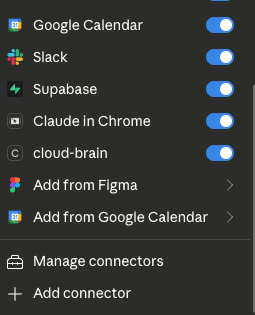
mcp connector
inspiration
this project started with andrej karpathy's post about maintaining a personal wiki for llm sessions. the idea: instead of starting every ai conversation from scratch, you maintain a structured markdown knowledge base that your ai can reference...
- knowledge compounds. every session adds to the wiki, so the next session starts smarter
- retrieval beats memorization. llms hallucinate less when they can pull from verified sources
- multiplayer is the goal.if one person's wiki helps their sessions, a network of wikis helps everyone
the problem
80%
re-derivation
0
cross-session sharing
∞
wasted context
how it works
┌──────────────────────────────────┐
│         ai session (claude)      │  ← what the user sees
├──────────────────────────────────┤
│          mcp connector           │  ← the bridge
├──────────────────────────────────┤
│   parser → embeddings → index    │  ← the engine
├──────────────────────────────────┤
│      markdown wiki (55 files)    │  ← the source
└──────────────────────────────────┘
what's built
honesty note:this table reflects actual state, not aspirational state. "works" means tested in real sessions. "mocked" means scaffolded but not connected to real infra.
| component | status | details |
|---|---|---|
| wiki parser | works | reads any markdown folder, obsidian wikilinks, frontmatter extraction, recursive directory walking |
| retrieval engine | works | openai text-embedding-3-large, supabase pgvector, cosine similarity search with configurable thresholds |
| mcp server | works | 5 tools: search_cloud_brain, pull_knowledge, list_topics, get_document, check_freshness |
| quote lifecycle | works | create, approve, settle, deliver. full lifecycle for knowledge quotes with pricing logic |
| safety layer | works | prompt injection scanning, input sanitization, rate limiting per session |
| payment settlement | mocked | usdm ledger scaffolded, megaeth settlement designed but not connected to live chain |
| multi-contributor network | not built | contributor isolation, reputation scoring, content dedup. designed but blocked on cold-start density |
dogfooding validation
- ambient retrieval works in single-player. claude code sessions with cloud brain produced noticeably better research outputs than sessions without it
- context convergence is faster. instead of re-explaining project context each session, the mcp server pulls relevant prior work automatically
- outputs feed back in.each session's results go back into the wiki, so retrieval improves over time
why paused
- code works, product question unanswered. the technical infrastructure is solid, but the go-to-market for a knowledge network requires critical mass
- cold-start density problem. a knowledge network with one contributor is just a personal wiki. you need enough contributors for retrieval to beat what you already know
- micropayment ux unsolved. even if settlement works, the ux of paying per-query for knowledge retrieval is untested in real workflows
- v2 reframe designed but not built.the pull-lift evaluation framework is the next step, shifting from "can we build it" to "can we bootstrap it"
pull-lift evaluation
pull-lift is a framework for evaluating whether a knowledge contribution actually improves downstream session quality. it measures the delta between a session with and without access to a specific piece of contributed knowledge.
  SESSION WITHOUT           SESSION WITH
  CLOUD BRAIN               CLOUD BRAIN
  ┌──────────┐              ┌──────────┐
  │ question  │              │ question  │
  │     ↓     │              │     ↓     │
  │ raw LLM   │              │ pulled    │
  │ response  │              │ context + │
  │           │              │ response  │
  └──────────┘              └──────────┘
       ↓                         ↓
   BASELINE                  LIFTED
   quality                   quality
       └────── DELTA = LIFT ──────┘
| concept | definition |
|---|---|
| pull | how often a piece of knowledge is retrieved across sessions |
| lift | measurable improvement in session output quality when knowledge is present vs. absent |
| pull-lift score | pull frequency x lift magnitude. ranks contributions by actual value delivered |
| decay | knowledge freshness penalty. older contributions score lower unless actively re-validated |
| reputation | contributor-level aggregate of pull-lift scores across all their contributions |
- solves cold-start pricing. new contributions are priced at cost until pull-lift data accumulates
- aligns incentives.contributors earn more when their knowledge actually helps, not just when it's retrieved
- enables quality curation. low pull-lift contributions get deprioritized in retrieval ranking
- builds retention. high-reputation contributors become hard to replace
- maps to micropayments. settlement amounts scale with pull-lift, so you pay more for knowledge that actually helps
self-assessment
| dimension | score | notes |
|---|---|---|
| technical execution | strong | core infrastructure works end-to-end in single-player mode |
| product thinking | strong | identified the cold-start problem before over-investing in multiplayer |
| kill discipline | moderate | paused rather than killed. the thesis is valid but timing depends on contributor density |
| ai-assisted building | strong | built almost entirely with claude code and openai codex, validating the workflow |
| evaluation rigor | moderate | pull-lift framework designed but not yet validated with real multi-contributor data |
| market timing | uncertain | mcp ecosystem growing fast but knowledge-network demand unproven at scale |
verdict
verdict: paused, not abandoned
the infrastructure works. the product question (can you bootstrap a knowledge network?) is what stopped me. i only realized this after building the initial version, which is exactly how it should work: build to learn, not build to ship.
other projects
shipped
HOP Network
conceived, raised ~$200k pre-seed, and shipped a 5-platform decentralized vpn mvp in 8 months with a 5-person global team.
read case study →deprioritized
Maritime Stablecoin
killed a $100b+ thesis after primary research debunked the desk-research pain. documented the full post-mortem.
read case study →